
Faith-based education in nursing combines clinical excellence with values like compassion, dignity, and service. Marian University’s ABSN program integrates these principles to prepare future nurses for holistic, patient-centered care they will deliver while fostering resilience and purpose in their professional journey.
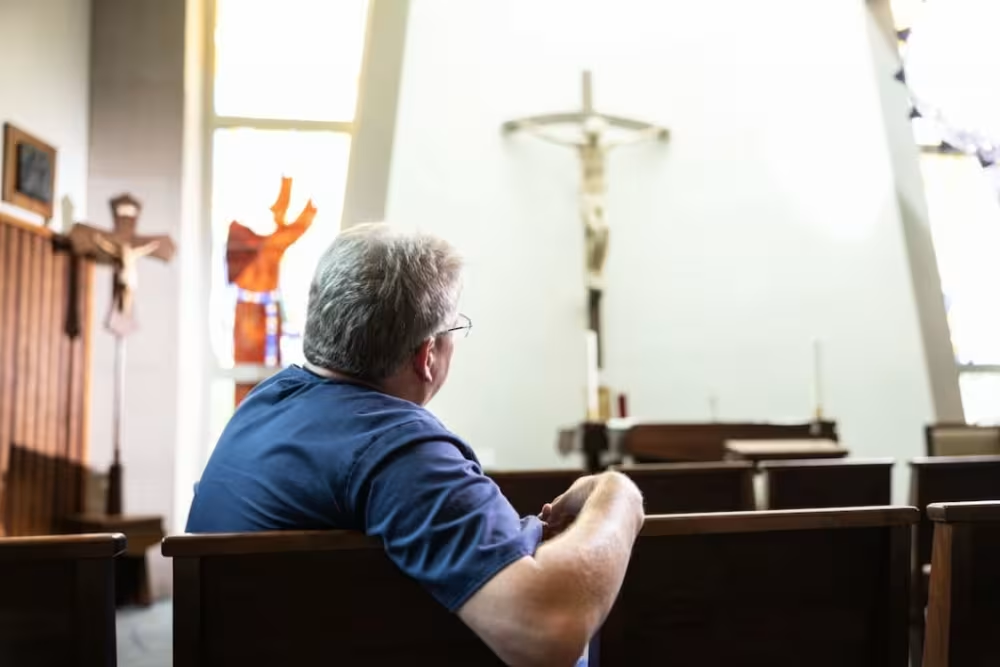
In nursing, you can demonstrate your values through how you speak to a nervous patient or loved one, approach ethical dilemmas, collaborate under pressure, and show compassion in challenging situations. A faith-based education can help connect nursing knowledge and practice with deeper spiritual commitments like human dignity, mercy, and service.
For 175 years, Marian University has provided students with a quality education framed in the context of Franciscan values, including the dignity of the individual, peace and justice, reconciliation, and responsible stewardship.
Our second-degree Accelerated Bachelor of Science in Nursing (ABSN) program can be completed in as few as 16 months after enrollment, making us an accessible option for students within commuting distance of our program sites in Indianapolis, Indiana, or Nashville, Tennessee.
Let’s explore what faith in nursing education can look like, why many students experience nursing as a calling, and how a mission-driven program like Marian’s can support students as they prepare to change lives through professional practice.
Understanding the Role of Faith in Education
Faith-based education is sometimes misunderstood as education that includes religious studies as just one subject in a curriculum. In practice, it is a holistic outlook that educates the whole person, intellectually, morally, and spiritually. This is especially important for nursing, a profession that deals with people when they are most vulnerable.
Technical competence is essential but so is the ability to practice with integrity in complex situations like caring for a patient who is afraid or angry, navigating family conflict at the bedside, or supporting a person facing serious illness. Faith-based education helps students strengthen the inner “why” behind the work, which becomes especially important when training is demanding.
Nursing as a Calling and How Faith Supports That Journey
Many nurses describe their path as more than a career choice. They talk about being drawn to nursing by a desire to serve, to relieve suffering, and to do work that matters. The idea of nursing as a calling is common in faith-based nursing education because it anchors students. Purpose can sustain you through the realities of an ABSN program, which include intensive online-based coursework and long days practicing skills.
Faith-based programs like Marian ABSN emphasize holistic care, including the emotional and spiritual dimensions of health, so students are better prepared to treat the full spectrum of patient needs. In the context of our program, qualities like compassion are treated as a central nursing responsibility in delivering great care.

What does it mean to be a nurse? Learn how nurses uphold the dignity of each patient, serve as advocates, and deliver life-changing care.
The Benefits of a Faith-Informed Nursing Program
A strong nursing program must build clinical competence. Faith-informed nursing programs like ours accomplish that while also developing the habits that support excellent care. In mission-driven programs, values are integrated early and consistently.
In our ABSN program, nursing concepts and practice are presented through the lens of Franciscan values that shape how students understand leadership, responsibility, and patient care. Students still learn evidence-based practice to a high standard, while also learning how to recognize emotional distress, support families, and communicate in ways that reduce fear and build trust.
The supportive and positive environment, as well as the values that can help shape your identity as a practicing nurse, help make faith in nursing education a cornerstone for many registered nurses.
How Faith-Guided Learning Enhances Patient Care
When a patient receives care, all of their needs must be met beyond just physical symptoms. Even when their primary needs may be physical, illness can affect every part of the person. Faith-guided learning equips future nurses to recognize that reality and respond skillfully.
Patient-centered care requires respect for each person’s preferences and beliefs. A faith-guided nursing education holds dignity and respect as foundational for delivering ethical care to all. This faith-based framework also highlights the importance of respecting human dignity and helping students become secure in their own beliefs.
Skills in nursing practice that can be improved by faith-based learning can include:
- Communication
- Compassion
- Empathy for patients and loved ones
- Ethical grounding in complex situations
Ultimately, a faith-based nursing education can show itself in how a nurse consistently practices with a holistic mindset that accounts for every aspect of a patient.

Why a Faith-Centered Approach Matters for Future Nurses
Healthcare needs nurses who can think critically, adapt quickly, and act with compassion. That combination is harder than it sounds. Technical excellence is essential, but a faith-centered approach to education keeps the whole person at the center of care. Looking back, the thing that a patient will most remember is whether they felt safe, respected, and understood with you.
A faith-centered approach makes a difference for future nurses, both in the ways it informs patient interactions as well as how it can clarify your own path. As Cameron Lohman, Marian ABSN student, shares, “I just enjoy pediatrics. And my [past] experience as a teacher definitely pushed me in that direction because kids are fun to work with. They're the future. And being able to help them is kind of what I feel I'm called to do.”
Listening to that sense of calling, especially as you explore various practice areas through clinical rotations, can help you determine where you most belong. Feeling called to a specific field can keep you going with the knowledge that you’re doing something that matters, even on the toughest days.
How Marian’s Mission-Driven Nursing Education Supports Students
Marian University’s ABSN program is grounded in Franciscan values that shape the student experience and the way care is delivered. Our strong values also help to create a culture where everyone feels encouraged and supported.
“I really like this job,” says Logan Westmoreland, a faculty instructor for Marian’s ABSN program, on how our faith-infused environment motivates him. “I work with an amazing group… everybody here pushes one another to be better, to pursue higher degrees, to think critically. We just have a great culture.”
Stacy Berard, a Marian ABSN student, appreciates the communication between students and instructors. “The didactic professors are really open and available for communication. All we have to do is send them a quick message and we're able to hop on a [call] to talk over missed concepts or get clarification on a few muddy points. And the clinical leads are really interested and invested in our success and really help us achieve that.”
Faith-based nursing education can strengthen the concepts found in secular education, forming nurses who are clinically prepared and driven by deeply held convictions.
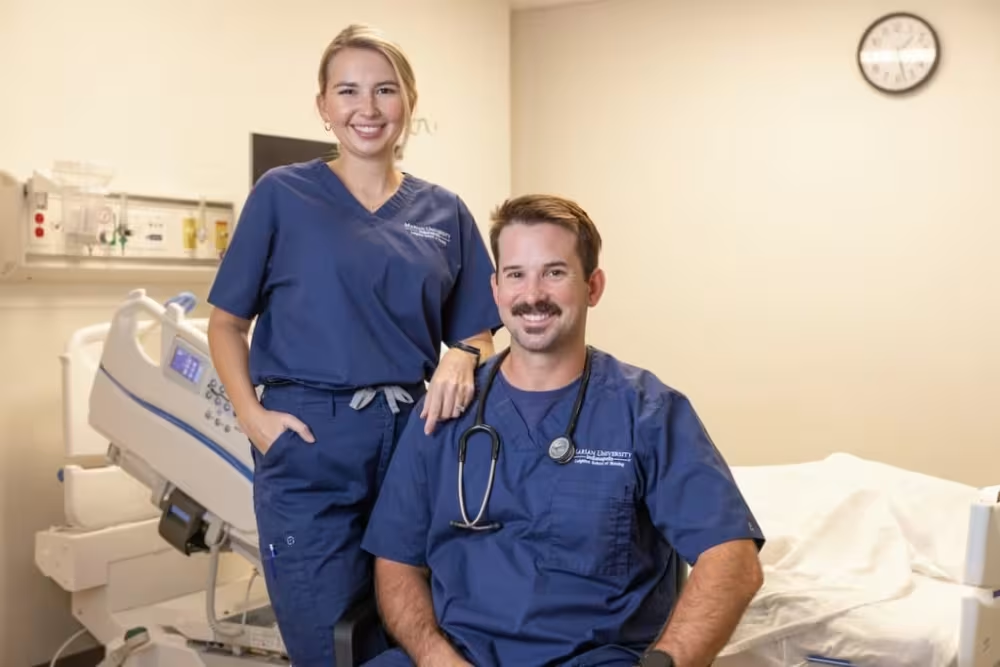
See how nursing communication is central to patient care, and how you improve these skills as a Marian ABSN student.
Explore a Faith-Based Nursing Education With Marian University
After examining how a faith-based education provides the bedrock for a successful career in nursing, are you ready to learn about next steps? Contact us today by filling out the form and a Marian ABSN admissions advisor will reach out to continue the conversation.