
Comparing BSN vs MSN means comparing a bachelor’s degree to a graduate degree. Earn your BSN to begin your nursing career education through the ABSN program at Marian University. If you already have your BSN and you want to pursue nursing leadership or specialties, consider pursuing an MSN degree.
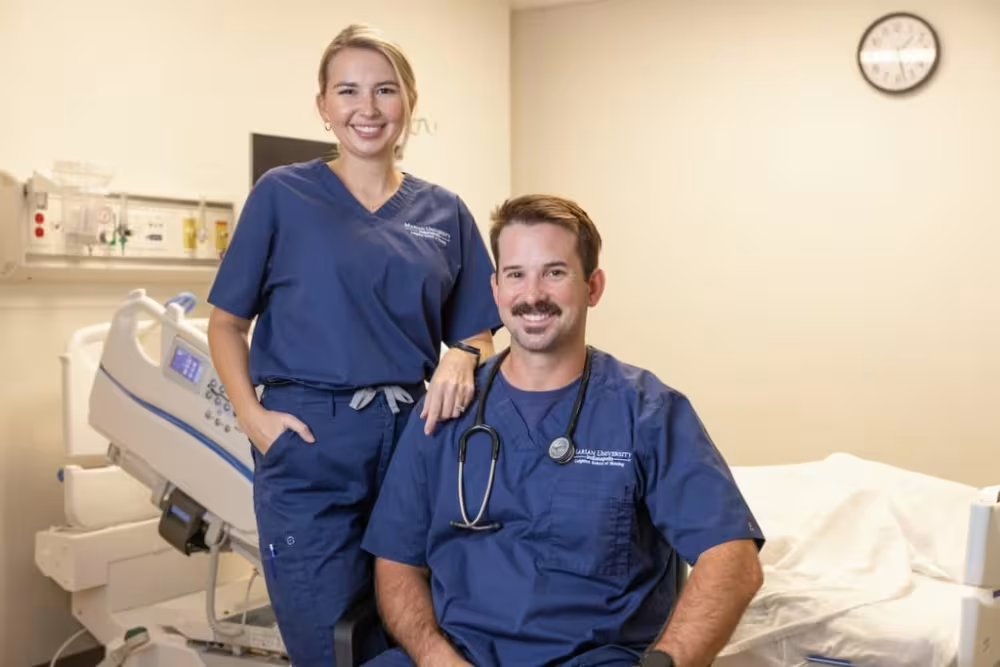
Deciding between a Bachelor of Science in Nursing (BSN) and a Master of Science in Nursing (MSN) is a significant choice that can shape your nursing career. While both degrees lead to rewarding opportunities in healthcare, they serve different purposes and are designed for individuals with different career paths in mind. Your choice should be guided by your current level of education, career ambitions, and desired level of responsibility.
At Marian University, students who are ready to enter the nursing profession can begin more quickly through our Accelerated Bachelor of Science in Nursing (ABSN) program. This option can be completed in as few as 16 months and is designed for students who already hold college credits or a previous degree and want an efficient pathway into professional nursing practice.
Let’s examine the differences between these degree paths and explore the variables that could meaningfully impact your choice.
What are BSN and MSN Degrees?
A BSN, or Bachelor of Science in Nursing, is an undergraduate degree that prepares students to enter the nursing field. It combines nursing theory, general education, and clinical experience to ensure graduates are ready to provide safe, evidence-based patient care in a variety of healthcare settings. The curriculum of a BSN program emphasizes key nursing clinical skills, critical thinking, communication, ethics, and leadership fundamentals.
An MSN, or Master of Science in Nursing, is a graduate-level degree intended for students who want to access career paths with a higher level of autonomy. MSN programs can focus on topics including specialized clinical practice, leadership, education, or healthcare administration. Because these roles require a strong foundation in nursing practice, most MSN programs require applicants to already hold a BSN with experience working as a registered nurse.
Since advanced nursing degrees like an MSN focus on preparing you for leadership in specialty roles, you usually must hold a bachelor’s degree in nursing to be eligible. A master’s degree will open different doors for future career advancement.

Do you already have a career but want to become a nurse? See how to become a nurse fast with an accelerated BSN program.
Should You Earn a BSN Degree or an ABSN?
When weighing a BSN program vs an ABSN program, it’s important to note that these are two separate program formats that both confer the same degree. ABSN programs are merely an accelerated pathway to complete a bachelor’s-level nursing education. Previous college credits or a non-nursing bachelor’s degree fulfill requirements for non-nursing classes needed to earn a BSN.
BSN curricula focus on the essential components of nursing practice. Through coursework and skills labs, nursing students learn how to:
- Administer medications
- Assess patients
- Coordinate care
- Collaborate with patient care teams
Clinical rotations also allow students to apply classroom knowledge in real patient care settings, building confidence and improving skills throughout.
A traditional BSN could be the right choice if you are new to the field, if you accept the need for a four-year pathway, and if you are ready to pursue a nursing career without prior college credits. An ABSN program means a faster, more intensive pathway to a BSN degree in as few as 16 months. This could be the right choice if you meet admissions requirements and are ready for a faster-paced experience.

Should You Earn an MSN Degree?
An MSN might be right for you if you are a nurse with professional experience looking to focus on a specialization or pursue a leadership position. This degree supports specialization in areas such as:
- Advanced clinical practice
- Education
- Healthcare administration leadership
MSN programs are designed to refine clinical reasoning, strengthen leadership capabilities, and prepare nurses to influence patient care. If you choose to pursue this degree, you may enter advanced practice roles with more autonomy and typically higher pay than practicing RNs. According to the U.S. Bureau of Labor Statistics, the median annual salary of an RN is $93,600. Meanwhile, advanced practice roles like nurse practitioners earn a median annual salary of $132,050. You should consider the extra cost and time needed to gain experience as an RN and pursue an MSN degree.
BSN vs MSN: Education Requirements and Prerequisites
You need to meet academic requirements to enroll in a traditional four-year BSN program, but you do not need previous college credits. Most ABSN programs require a previous bachelor’s degree or a set number of college credits.
Several prerequisite courses may be required for the ABSN program of your choice, providing a firm foundation in subjects including:
- Anatomy
- Chemistry
- Microbiology
- Physiology
To enroll as an MSN student, you must meet additional requirements. You will typically need at least a BSN with experience as a practicing RN. Some direct entry MSN programs may accept a non-nursing bachelor’s degree, along with fulfilled grade requirements and completion of prerequisites.
Career Opportunities: BSN vs MSN
A BSN prepares graduates for a wide variety of nursing roles, making this an ideal entry point into the profession. Nursing offers a huge array of work environments and practice areas, some common positions for BSN-prepared nurses include:
- Pediatric nurse
- Public health nurse
- Trauma nurse
- Travel nurse
An MSN expands career possibilities by qualifying nurses for advanced practice and leadership roles. These positions often involve higher levels of responsibility and autonomy. Common nursing roles you can access with an MSN include:
- Certified nurse midwife
- Certified registered nurse anesthetist
- Clinical nurse leader
- Director of Nursing
You may also be able to pursue specialized roles in research, higher education, consulting, or technology systems.

Want to become a leader? Pursue nursing leadership: how to advance your career and make an impact
Earn your Nursing Degree at Marian University
Now you have more context to decide whether your desired career goals and timeline would be best served by a BSN vs an MSN. If your career goals include becoming a practicing nurse, a BSN program may be right for you.
As a Marian ABSN student, you will work through a hybrid curriculum that prepares you for a nursing career and builds vital skills. Comprehensive online coursework, hands-on skills, and simulation labs in a structured environment, and clinical rotations at top area hospitals will all ensure that you graduate ready to take on a new career as an excellent practicing registered nurse.
Our Associate of Science in Health Science transfer pathway is also available to students with at least 30 non-nursing college credits and a cumulative GPA of 2.0 or higher.
If you have previous college experience and want to enter the nursing field, consider applying to Marian’s ABSN program and enter the nursing workforce sooner. Contact an admissions advisor today to learn more and take the next step.