
An oncology nurse works with cancer patients and their families. Oncology nursing involves administering medications like chemotherapy, delivering patient education, providing emotional support, and managing treatment side effects. Strong emotional resilience and the ability to comfort others are important for oncology nurses.
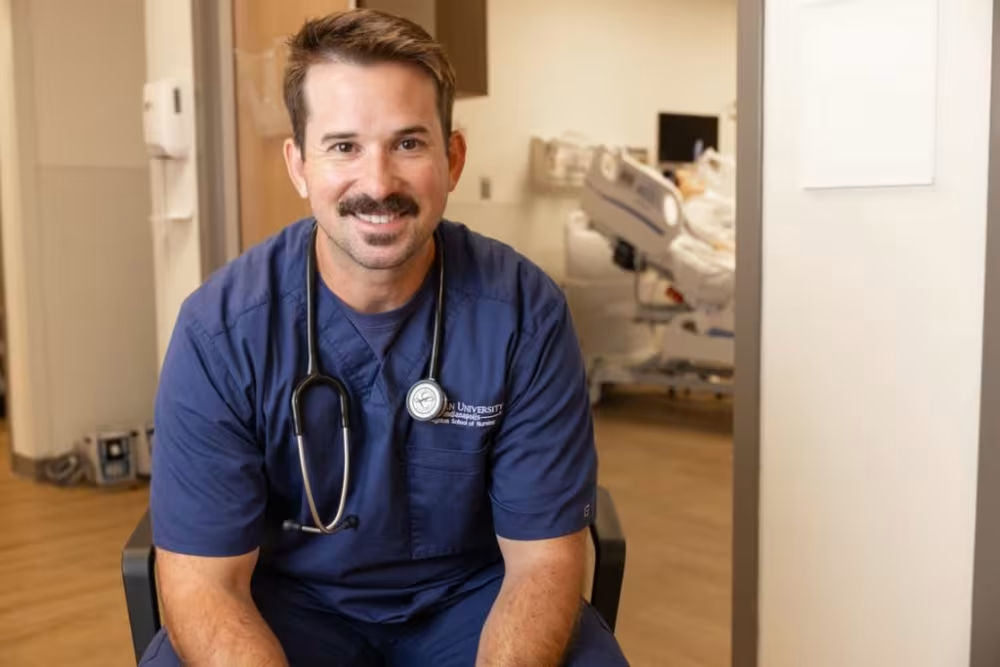
The American Cancer Society estimated that more than 2 million new cancer cases would be diagnosed in 2025, excluding non-melanoma skin cancers. Cancer is a devastating group of diseases that occur when cells mutate and grow uncontrollably. Cancer treatments can be effective, but they typically have adverse effects on patients. If you’re interested in cancer and its treatment, you might consider pursuing a career in oncology nursing.
Nursing in any specialty can be a good second career option for non-healthcare professionals interested in switching careers. Marian University can make it happen in less time than you’d think, thanks to our Accelerated Bachelor of Science in Nursing (ABSN) program. In as few as 16 months, you could receive your nursing degree and be ready to start working as a confident, capable nurse.
While you’re planning your career, take a closer look at the answers to common questions, such as, What is an oncology nurse? and What do oncology nurses do? Explore the potential job settings and start working toward your nursing degree.
What Is Oncology Nursing?
Oncology nursing is a nursing specialty that focuses on the care of patients with cancer. Oncology nurses work with patients across the lifespan, from diagnosis to treatment to remission. Nurses administer treatments and help patients manage the side effects and complications of cancer treatments. These registered nurses (RNs) deliver life-affirming care that supports patients’ physical, mental, socioemotional, and spiritual wellness.

Which nursing specialty could be the right choice for you? Learn about different specialties and examine each.
What Does an Oncology Nurse Do?
An oncology nurse serves as an educator, patient advocate, and care coordinator, among other responsibilities. If you decide to follow the process of becoming an oncology nurse, you can expect to handle tasks including:
- Administering medications, including chemotherapy and infusions
- Assessing mental and socioemotional needs
- Coordinating care with other healthcare providers
- Creating and contributing to nursing care plans
- Educating patients and families about specific types and stages of cancer, treatment options, and treatment side effects
- Helping patients make lifestyle adjustments during cancer care
- Managing medication side effects
- Monitoring patients’ responses to their treatments and updating clinical documentation
- Providing post-operative nursing care
Oncology nurses need to be strong advocates for their patients. Cancer is not just a disease; it’s a complete lifestyle transformation that affects the whole family. Families need to figure out how to care for their loved one at home, how to take time off work to transport the patient to treatment, whether to seek counseling or support groups, and how to pay for cancer care. Oncology nurses connect families to essential community resources that can help them navigate the aftershocks of a cancer diagnosis.
Where Do Oncology Nurses Work?
Oncology nurses can work anywhere cancer patients receive treatment. This includes oncology departments in hospitals and standalone cancer treatment centers. Some oncology nurses work at hospice care facilities or for hospice agencies that provide care at patients’ homes. An oncology nurse could also work at a specialist’s office. For example, urologists treat cancers of the urinary tract and the male reproductive system.
How to Become an Oncology Nurse
If you decide to pursue a career in oncology nursing, your journey will likely start with a BSN. If you’re a professional in another field with a non-nursing bachelor’s degree, you don’t need to return to school for four more years to earn a BSN. Instead, you may qualify for Marian University’s ABSN program, which can allow you to graduate in as few as 16 months.
The general path toward becoming an oncology nurse includes these steps:
- Apply to nursing school and meet any needed prerequisites.
- Earn a BSN through a combination of didactic coursework and hands-on experiential learning.
- Pass the NCLEX-RN and obtain a nursing license.
- Gain clinical experience in cancer care.
- Earn an oncology certification.

Learn what you can expect during clinical rotations.
Essential Skills and Qualities for Oncology Nurses
What is an oncology nurse’s most important skill? An oncology nurse needs to excel at delivering emotional support to patients and their family members. Cancer is a frightening diagnosis, and cancer treatment can be very taxing. Patients often face the possibility of death. It’s not unusual for cancer patients and their families to experience anticipatory grief, a complex set of emotions that occurs when anticipating loss. Providing emotional support is one of the most important tasks for an oncology nurse.
Along with being skilled at consoling others, oncology nurses can benefit from the following:
- Communication skills
- Compassion and empathy
- Emotional resilience
- Professionalism, including setting professional boundaries
- Teamwork

Take a closer look at why communication in nursing is so important.
Some of the most important hard skills in oncology nursing include:
- Infection control
- IV skills
- Medication management
- Palliative care
- Patient education
- Pharmacology
- Safety protocols for hazardous substances
Career Outlook and Oncology Nurse Salary Expectations
The U.S. Bureau of Labor Statistics (BLS) does not offer job growth or oncology nurse salary information specifically for this specialty. For all types of RNs, however, the job growth rate is expected to be 5% from 2024 through 2034, faster than average. This translates to about 166,100 added RN jobs during this time period. All types of RNs made a median annual salary of $93,600 as of May 2024, according to the BLS.
Pros and Cons of Working in Cancer Care
Some nurses decide to work in cancer care because they have survived cancer themselves or have helped care for family members with cancer. For these nurses, oncology nursing can be particularly meaningful. Other advantages of working in cancer care could include:
- Being able to rejoice with patients who have achieved remission
- Opportunities to specialize further and grow your career
- Plenty of room for continuous learning and ongoing professional development
- Variety of work settings to choose from
Like other nursing specialties, cancer care does have some disadvantages. It can be a high-stress specialty. The effects of cancer treatment are a heavy burden for patients, and it can be difficult to see people suffer. Along with the emotional toll, there is a risk of exposure to toxic chemotherapy drugs and radiation. Following safety protocols mitigates this risk.
Advancement Opportunities for Oncology Nurses
One of the ways an oncology nurse can pursue career advancement is by specializing in a particular area of cancer care. Options include:
- Bone marrow transplant
- Chemotherapy
- Pediatric oncology
- Radiation oncology
It’s a good idea for oncology nurses to pursue certification. For example, a nurse might become a Certified Breast Care Nurse (CBCN). Oncology nurses can also pursue a less specialized certification, such as Oncology Certified Nurse (OCN).
Other advancement possibilities include roles such as:
- Clinical nurse specialist (CNS)
- Nurse consultant
- Nurse manager
- Nurse practitioner (NP)
- Nurse researcher
Get Started in Oncology Nursing at Marian University
Marian University offers an accelerated pathway toward becoming an oncology nurse or any other type of RN. If you have a non-nursing bachelor’s degree, you may be eligible to apply to our ABSN program. Our nonprofit, faith-based school offers nursing education grounded in Franciscan values, including responsible stewardship and upholding the dignity of the individual.
At our ABSN program sites in Indianapolis, Indiana, and Nashville, Tennessee, you will learn how to take a holistic approach to patient care. You’ll be supported by attentive faculty and Academic Success Coaches, along with your peers in your nursing cohort. Contact an admissions advisor today to learn more and get started.