
In nursing school, you’ll complete didactic coursework and participate in hands-on learning experiences, such as nursing skills and simulation labs. You’ll also work clinical shifts at a nearby healthcare facility to gain hands-on experience. Nursing school can be challenging, but you’ll have support.
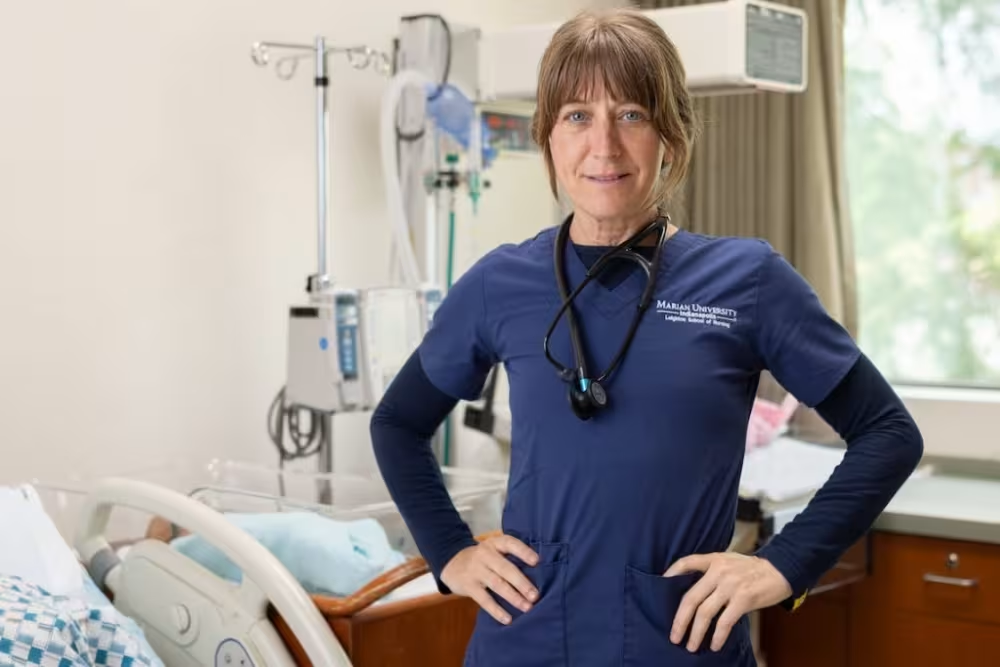
In an Accelerated Bachelor of Science in Nursing (ABSN) program, you can expect a fast-paced curriculum that enables you to graduate more quickly than in a traditional four-year BSN program. What is nursing school like academically? You’ll complete coursework online and participate in hands-on and immersive learning experiences to learn all the necessary skills to become a registered nurse (RN).
Marian University’s Accelerated Bachelor of Science in Nursing program welcomes career changers who would like to transition to the nursing field. You don’t need prior healthcare experience to apply. Here, you’ll receive a thorough grounding in nursing theory and clinical applications to graduate ready to take the NCLEX-RN and pursue nurse licensure.
If you're still undecided about going to nursing school, take a closer look at questions such as "How does nursing school work?” and “What is nursing school like for students?” Learning what to expect can help you prepare to make the most of the experience.
How Does Nursing School Work?
All nursing programs include two main types of learning experiences: didactic coursework and hands‑on learning. Didactic coursework teaches nursing theories and concepts through lectures, readings, and assignments, while hands‑on learning allows you to develop foundational skills, clinical judgment, bedside manner, and professionalism.
As you progress, you apply what you learn in theory classes during skills labs, simulation labs, and clinical rotations. These experiences show you how nursing knowledge translates to patient care and give you confidence in your ability to provide safe and compassionate care.
What Is an Accelerated Nursing Program Like?
Like other nursing programs, an accelerated nursing program includes both didactic classes and hands‑on learning, but the timeline is shorter. Whereas a traditional BSN typically takes four years to complete, an ABSN program condenses the nursing curriculum into a shorter period because you enter with completed general education courses.
Although the fast pace can be demanding, it is manageable if you stay organized and study regularly. When deciding between an accelerated option and a traditional pathway, consider how each approach aligns with your goals and compare an Associate Degree in Nursing with a BSN to find the degree that fits your career aspirations.
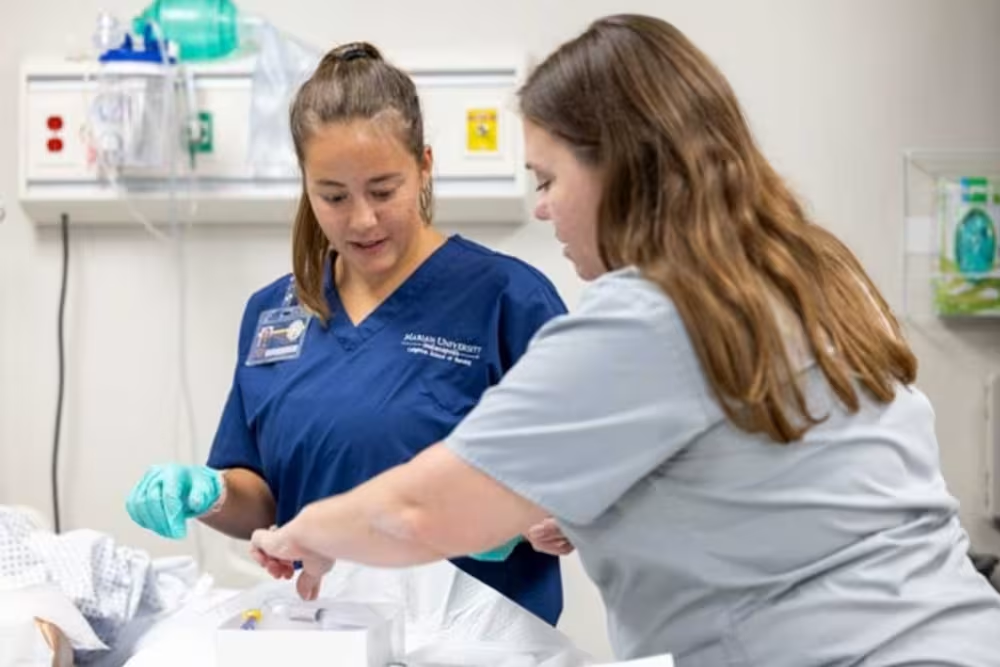
Compare an ADN vs. BSN and find the degree that’s right for you.
What to Expect in Nursing School Academically
In Marian University’s ABSN, you’ll work through a comprehensive nursing curriculum that covers health assessments, pharmacology, pathophysiology, mental health nursing, and the care of adults, children, and childbearing patients, among other key topics.
The curriculum is presented in three main learning components:
- Clinical rotations, which provide experience delivering direct patient care in the clinical environment.
- Nursing simulation labs, which let you work through clinical scenarios in a risk‑free setting to practice decision‑making and teamwork.
- Nursing skills labs, which teach essential skills such as inserting IV lines, administering injections and performing assessments.
- Nursing theory classes, which you can complete online.
What Clinicals Are Like in Nursing School
What is nursing school like when you start clinicals? During clinical rotations, you’ll be placed at nearby healthcare facilities for experiential learning. Clinical shifts are typically eight or 12 hours long. Before each shift, you’ll meet with your clinical instructor and a small group of peers for a pre-briefing to discuss the patient cases.
Initially, you’ll learn by observing and helping experienced nurses with basic tasks, such as prepping a room for a new patient or assisting with activities of daily living. As you gain experience, you’ll be entrusted with more complex nursing responsibilities, including administering medications, taking vital signs, and performing physical assessments.
You’ll gain experience working in a variety of practice areas. At Marian University, our ABSN students can work in specialty areas such as:
- Acute care
- Adult health
- Long-term care
- Mental and behavioral health
- Obstetrics
- Pediatrics
Clinical rotations also provide opportunities to build a professional network in the nursing world. It’s important to make a good impression on the nurses in the unit and other professionals at the organization you may meet, such as nurse administrators. Some graduates wind up working at the same healthcare facilities they completed clinical rotations in.
A Day in the Life of an ABSN Student
How does nursing school work in an ABSN program? In an ABSN program, your days will vary, rather than following a consistent schedule. For example, you might have an eight-hour or 12-hour clinical shift one day, followed by an in-person lab and classes the next day.
It’s important to keep careful track of your schedule and plan ahead using a planner or scheduling app. Set aside time for studying each day to review lecture materials, complete assignments and prepare for labs, clinical shifts and the NCLEX‑RN. Learning retention is generally better with multiple, shorter study sessions rather than one marathon study session.
Is Nursing School Hard?
Nursing school can be challenging due to the rigorous curriculum and the need for excellent time management skills. Despite this, countless nursing students have successfully graduated from ABSN programs, and you can, too. Remind yourself of the reasons why you want to become a nurse and stay committed to achieving your goal. Knowing what to expect in nursing school can help you prepare for it.
Support Systems That Help Nursing Students Succeed
Although nursing school can be challenging, you’ll have plenty of support along the way. If you find yourself struggling with a nursing concept, reach out to your nursing instructor to discuss it. You can also work one-on-one with Marian University's Academic Success Coaches who can help you strengthen your study techniques and time management skills and who can help guide you through any academic or personal challenges.
You’ll also have the support of your nursing cohort, the group of students moving through the ABSN program with you. Cohorts often become close‑knit, providing encouragement and a support network for studying. If you need help paying for nursing school, explore financial aid options and scholarships by consulting a financial aid advisor.
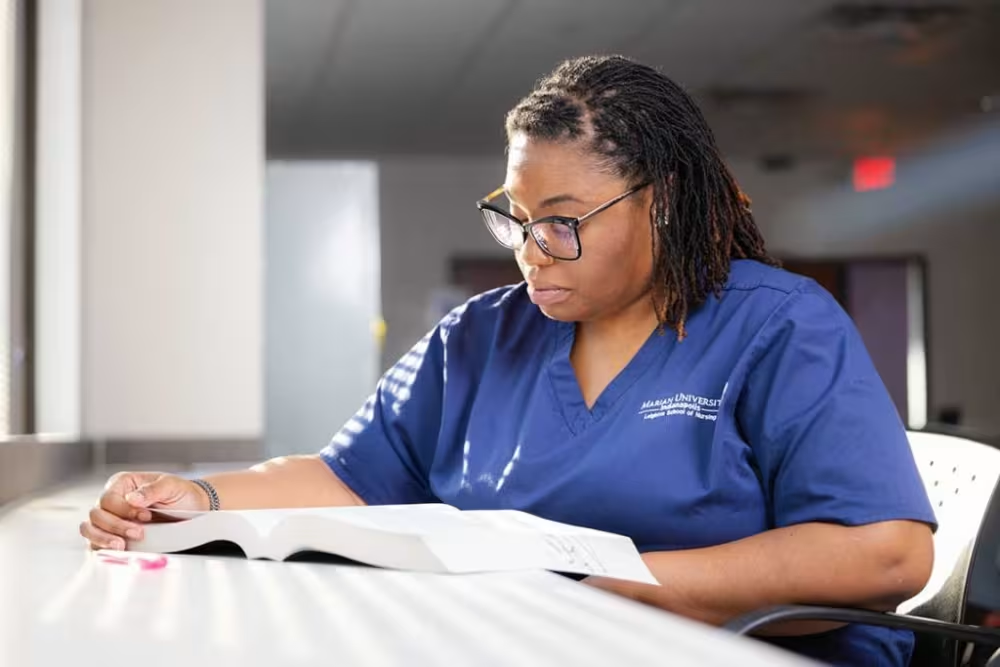
Get tips on how to pay for nursing school, including financial aid options and scholarships.
What Happens After Nursing School?
After graduating from nursing school, you can take the NCLEX-RN and pursue licensure. After passing the NCLEX-RN and obtaining your RN license, you can start applying to nursing jobs in the specialty area that interests you. Nurses can choose from many different practice areas, depending on their interests and career goals. Some examples include:
- Critical care nursing
- Emergency room nursing
- Medical‑surgical nursing
- Pediatric nursing
Landing your first nursing job marks the beginning of a lifelong learning journey. You will continue to build your knowledge and skills through on‑the‑job training, continuing education and specialty certifications.
Is an ABSN Program Right for You?
An ABSN program may be right for you if you have prior non-nursing college education and you’re interested in earning a BSN quickly. Each ABSN program establishes its own eligibility requirements. At Marian University, applicants must have a completed non-nursing bachelor’s degree with a cumulative GPA of 2.8 or higher. We also accept transfer students from Marian University’s Associate of Science in Health Sciences program with at least 30 completed credits and a cumulative GPA of at least 2.0.
Additionally, applicants must fulfill all prerequisite requirements. Even if you don’t quite meet these requirements, however, you’re still encouraged to speak with an admissions advisor. You can discuss how to strengthen your application and which prerequisites you need.
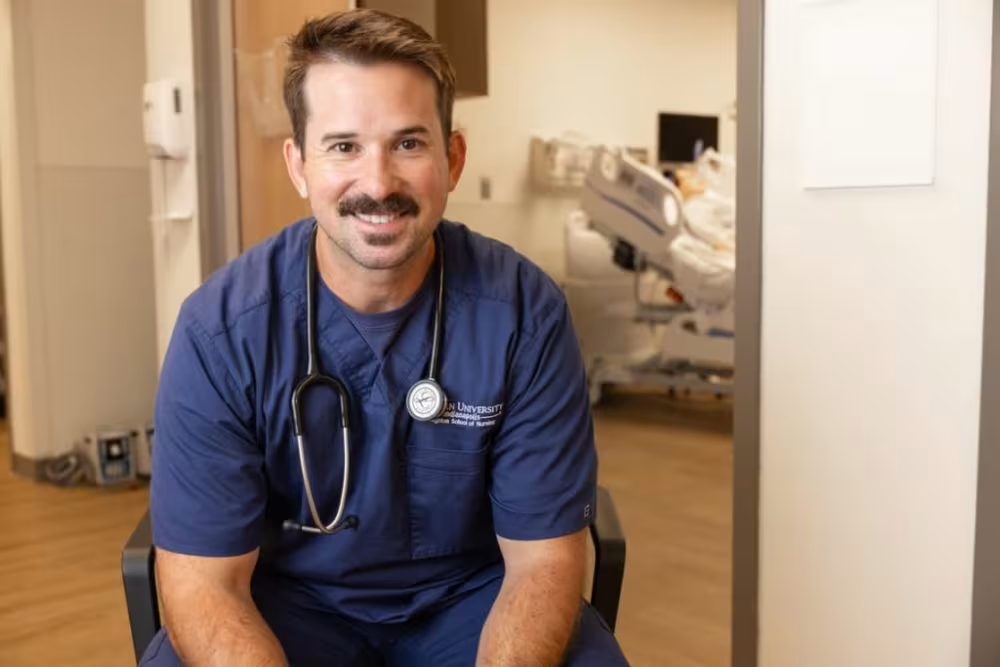
Get Started Today at Marian University
Marian University can help you make the transition to nursing faster. You can graduate in as few as 16 months from our ABSN program after completing any needed prerequisites. Benefit from a supported learning experience, with Academic Success Coaches available to work with you one-on-one. Our curriculum integrates our Franciscan values and prepares you for a successful nursing career with hands-on, immersive learning experiences.
Request information and connect with an admissions advisor today to discuss your eligibility for our ABSN program.